Black Limba Wood Bowl, 10.5-Inch Diameter, Food-Safe Finish
$135.00
-
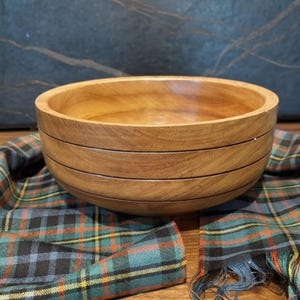
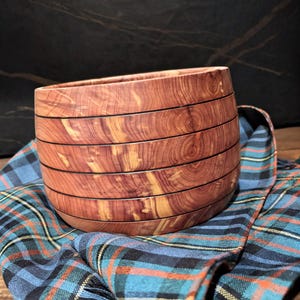
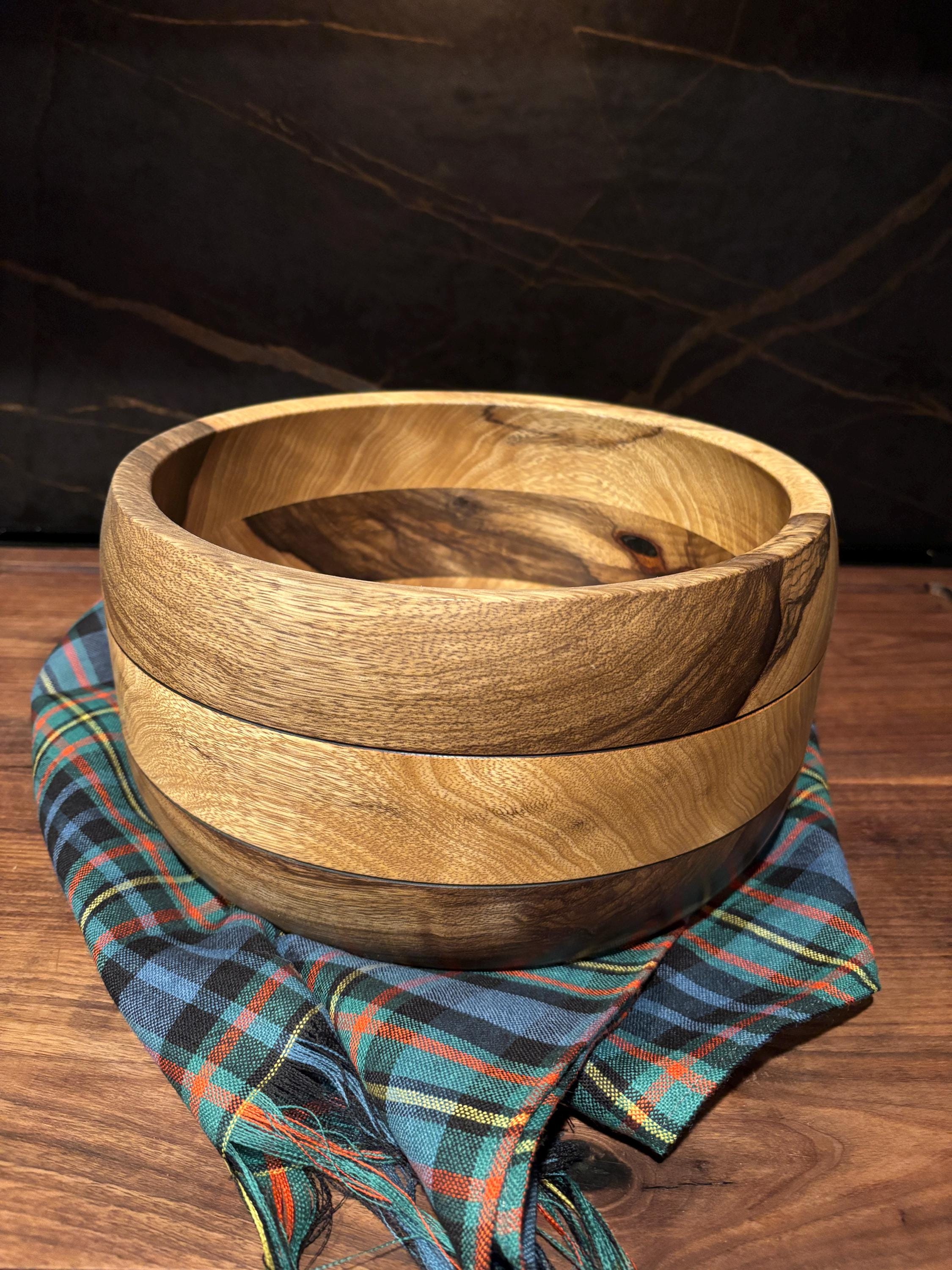
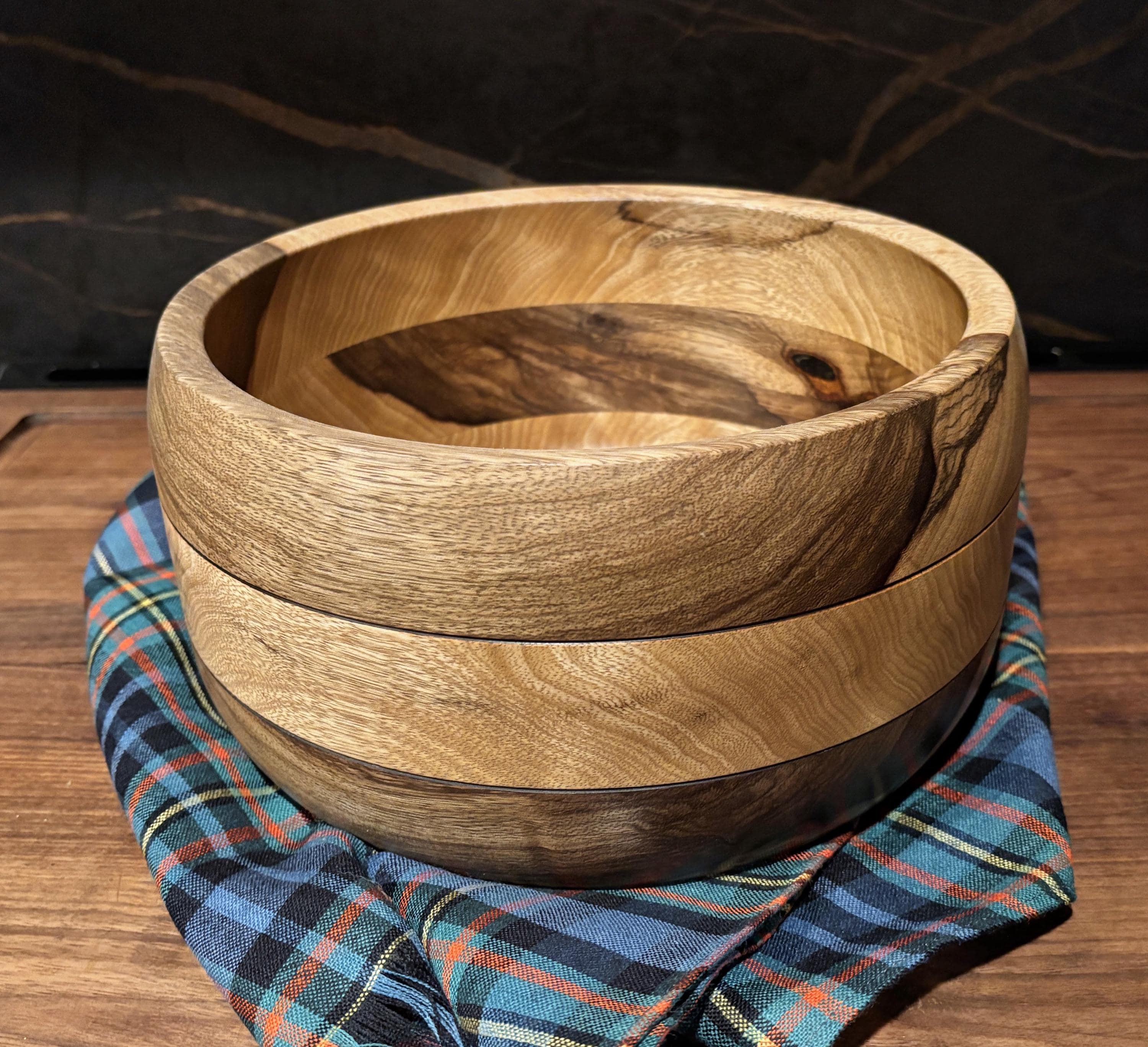
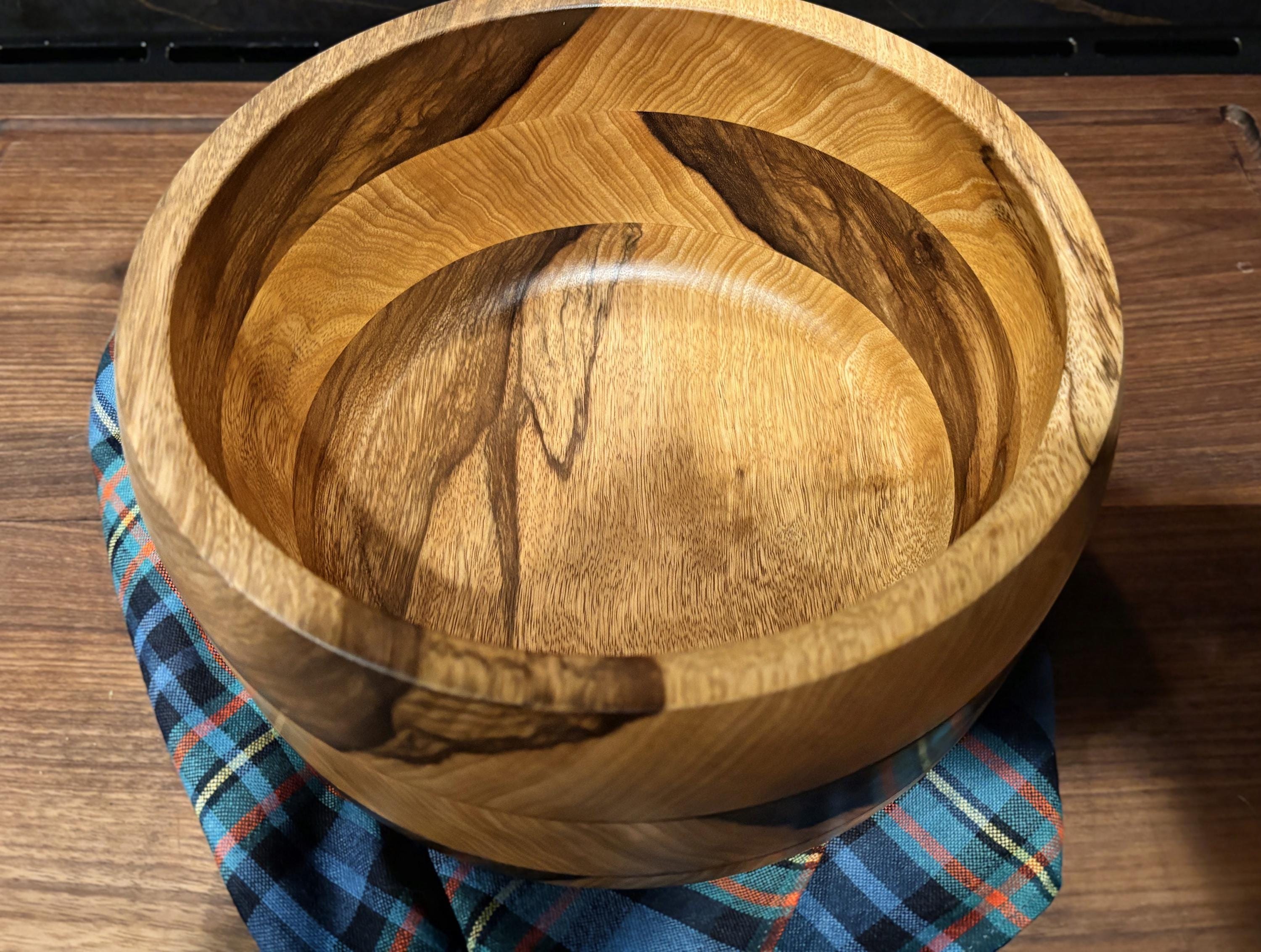
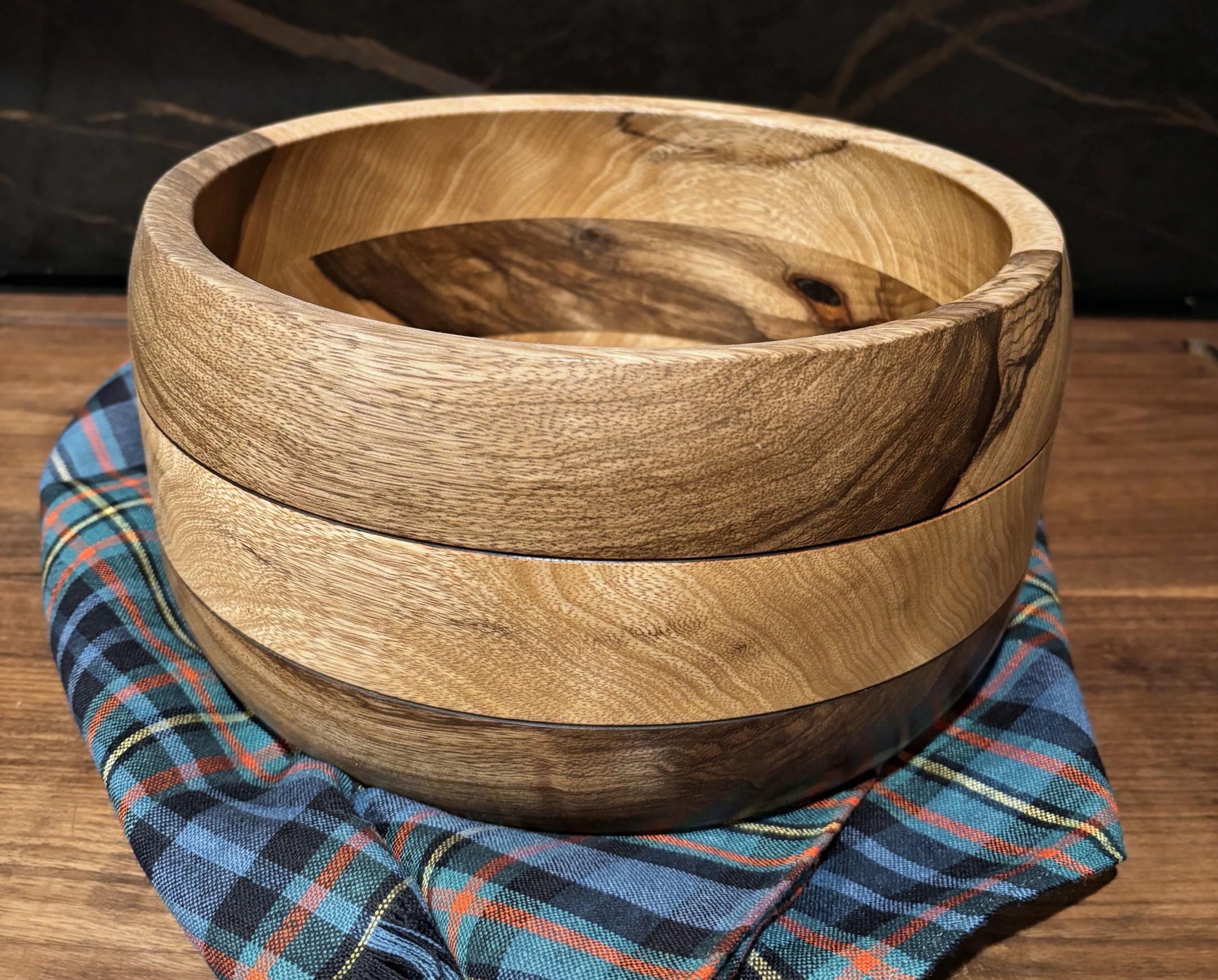
DetailsGolden warmth meets dramatic dark figure in this Black Limba wood bowl. The photos show honey-brown and pale tan areas contrasted by broad chocolate-brown patches and narrow, nearly black streaks. Fine flowing lines and rippled grain add movement across the exterior, while sweeping dark sections create an expressive pattern inside.
Measuring 10.5 inches in diameter, 5.75 inches tall, and 5 inches deep, this bowl offers a substantial presence for everyday serving or display. Finished with a food-safe finish, it is an inviting choice for presenting fresh fruit, sharing snacks, or serving a salad, as well as a focal point for a dining table or kitchen island.
A thick, rounded rim frames the deep interior, and the full, gently rounded sides narrow toward the bottom. Two horizontal lines encircle the exterior, adding visual definition to the profile. The striking contrast continues across the rim and into the bowl, making it an eye-catching centerpiece and a thoughtful housewarming or wedding gift.
Details
• Wood: Black Limba
• Diameter: 10.5 inches
• Overall height: 5.75 inches
• Interior depth: 5 inches
• Finish: Food-safe finish
• Appearance: Honey-gold and tan tones with chocolate-brown patches, near-black streaks, and flowing grain
• Profile: Thick rounded rim, full curved sides, and two visible horizontal exterior lines
About Black Limba
Black Limba (Terminalia superba) is a tropical West African hardwood also known as limba, korina, or afara. Black Limba and White Limba are the same species: the “black” designation refers to the darker figure, not uniformly black wood. Its grain is straight to slightly interlocked, with a coarse, open texture and moderate natural luster. Its overall color tends to deepen with age.
Characteristics That Enhance Its Appeal
• Natural contrast: Dark streaks and veins against a lighter golden background give figured Black Limba strong decorative appeal.
• Figured-wood premium: Figured Black Limba generally costs more than plain White Limba lumber. This supports a premium material story, though it does not guarantee a higher resale price.
• Design pedigree: Limba is used in furniture, decorative veneer, turned objects, and electric guitar bodies, making it an interesting choice for wood and design enthusiasts.
• Distinctive figure: The photographed bowl shows broad dark interior patches, narrow exterior streaks, and rippled grain against a golden background. This visible contrast is its strongest decorative selling point.
Recommended Uses
• Fresh fruit display on a kitchen island or dining table
• Serving salads, bread rolls, popcorn, or dry snacks
• Standalone centerpiece showcasing the wood
• Dry seasonal display with decorative ornaments
• Catchall for everyday small items on a console
• Housewarming or wedding gift for someone who appreciates natural wood
Use for serving rather than cooking or long-term food storage, and follow the finish manufacturer’s food-contact and curing instructions.
Care Recommendations
• Hand wash promptly with warm water, mild dish soap, and a soft cloth or sponge.
• Rinse briefly, towel dry immediately, and let the bowl air dry fully before putting it away.
• Do not soak, leave standing water inside, or place in a dishwasher, microwave, or oven.
• Store indoors, away from direct heat and prolonged direct sunlight. Limba is not naturally decay-resistant, so avoid damp storage or outdoor exposure.
• Use gentle serving utensils; avoid cutting in the bowl, abrasive scrubbers, and sharp objects. Limba is a relatively soft hardwood and can dent or scratch. -
Shipping & Policies
Shipping from United States
Processing time
1-2 business days
Customs and import taxes
Buyers are responsible for any customs and import taxes that may apply. I'm not responsible for delays due to customs.
Payment Options
Returns & Exchanges
Returns accepted within 14 days
Buyers are responsible for return shipping costs. If the item is not returned in its original condition, the buyer is responsible for any loss in value.
I gladly accept returns and cancellations
Request a cancellation within: 24 hours of purchase
The following items can't be returned or exchanged
Because of the nature of these items, unless they arrive damaged or defective, I can't accept returns for:
- Custom or personalized orders
- Items on sale
Conditions of return
Buyers are responsible for return shipping costs. If the item is not returned in its original condition, the buyer is responsible for any loss in value.
Frequently Asked Questions
Custom and personalized orders
Custom orders, such as furniture items, may be delivered at no additional cost, if delivery location is within 100 miles of Johnson City, TN.
Custom and personalized orders
All custom orders will require a deposit payment equal to the cost of the materials or 50% of the estimate for completed item, depending on which is lower cost.
Care instructions
Woodcraft items may be subject to some cracking or change in color over time. The artisan cannot guarantee against this natural change.
Related Products